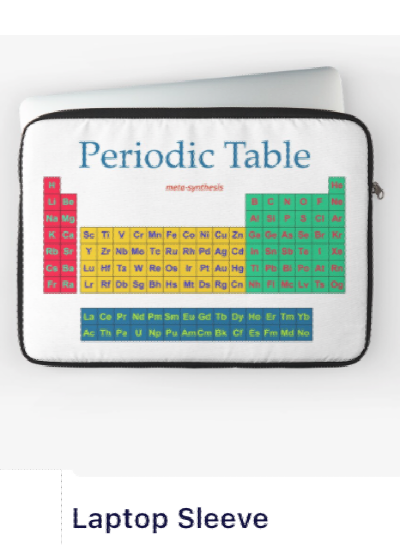
Periodic Table |
 |
 |
 |
 |
 |
 |
 |
Binary Compound Synthlet
Feel free to play around and theoretically synthesize more than 600 main group binaries using the Synthlet below and so search for corresponding real substances in the Chemical Thesaurus database & Wikipedia.
|
Calculated/predicted stoichiometric formula = NaF |
||||||||||
Actual binary compounds, from the Chemical Thesaurus database:
|
||||||||||
| Please understand that just because the Synthlet predicts a compound's stoichiometry and name, it does not mean that the compound always exists, that the common or usual name is always constructed or that there is only one binary compound. While most of the predictions are correct, it is the "incorrect" 10% that makes main group chemistry so interesting! | ||||||||||

The Binary Compound Synthlet uses the common or lower valency and electronegativity to predict the stoichiometry of the binary compound. For example, electropositive aluminium (valency = 3) reacts with electronegative oxygen (valency 2) to give aluminium oxide: Al2O3.
The Synthlet uses four rules to to construct the name:
- Both elements the same: Element
- One of the elements is He, Ne, Ar or Kr: No binary forms
- Metal + non-metal and non-metal + non-metal: electropositive element followed by electronegative element: Sodium oxide
- Metal + metal: Binary alloy
- Nature is subtle and the rather simple binary construction logic does make "mistakes", however, the actual compounds are found in the database and Wikipedia searches:
| Lithium carbide | Li + C gives Li2C2 (lithium acetylide) not the predicted Li4C |
| Boron carbide | B + C gives B4C not the predicted B4C3 |
| Lithium boride | Li + B gives Li2B3, LiB2 & LiB0.8-1.0, not the predicts Li3B |
| Lithium-Sodium alloy | Li does not alloy with Na, K Rb or Cs due to its small atomic radius, but it does alloy with Al |
| CH4, Methane | The predicted name is: hydrogen carbide |
|
|
|
| Binary Compounds | Electronegativity |
© Mark R. Leach 1999 –
Queries, Suggestions, Bugs, Errors, Typos...
If you have any:
Queries
Comments
Suggestions
Suggestions for links
Bug, typo or grammatical error reports about this page,please contact Mark R. Leach, the author, using mark@meta-synthesis.com
This free, open access web book is an ongoing project and your input is appreciated.