Periodic Table |
 |
 |
 |
 |
 |
 |
 |
| What is the Periodic Table Showing? | Periodicity |
The INTERNET Database of Periodic Tables
There are thousands of periodic tables in web space, but this is the only comprehensive database of periodic tables & periodic system formulations. If you know of an interesting periodic table that is missing, please contact the database curator: Mark R. Leach Ph.D. The database holds information on periodic tables, the discovery of the elements, the elucidation of atomic weights and the discovery of atomic structure (and much, much more).
| Year: 2014 | PT id = 636, Type = formulation |
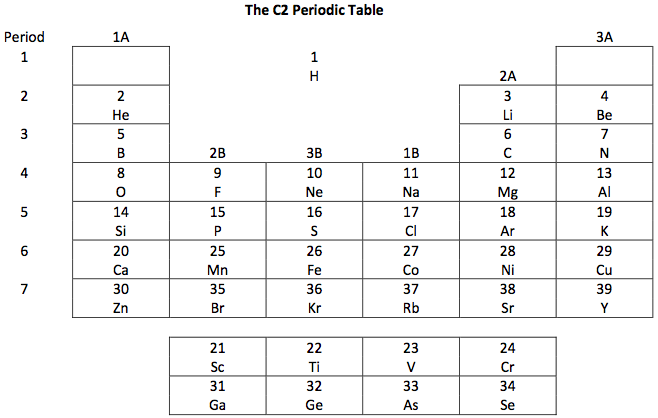
Lado's Periodic Table Series Analysis
By Solomon F Lado, a mathematical analysis.
Abstract (full paper):
"There is a periodic table, at least in terms of atomic number and electronic configuration, for every positive integer, c >= 2, with a capacity of 20c2 – 21c + 1 elements, where c is the construction index, and c equals one plus the maximum number of electrons per orbital of an atom. The c-construction index and the c-construction-index formulae are unique to this report. The maximum number of potential orbitals per sub-shell of an atom = 3n-1 where n is the index of the s, p, d, and f sub-shells":
|
|
|
| What is the Periodic Table Showing? | Periodicity |
© Mark R. Leach Ph.D. 1999 –
Queries, Suggestions, Bugs, Errors, Typos...
If you have any:
Queries
Comments
Suggestions
Suggestions for links
Bug, typo or grammatical error reports about this page,please contact Mark R. Leach, the author, using mark@meta-synthesis.com
This free, open access web book is an ongoing project and your input is appreciated.