Periodic Table |
 |
 |
 |
 |
 |
 |
 |
| What is the Periodic Table Showing? | Periodicity |
The INTERNET Database of Periodic Tables
There are thousands of periodic tables in web space, but this is the only comprehensive database of periodic tables & periodic system formulations. If you know of an interesting periodic table that is missing, please contact the database curator: Mark R. Leach Ph.D. The database holds information on periodic tables, the discovery of the elements, the elucidation of atomic weights and the discovery of atomic structure (and much, much more).
Periodic Tables from the year 1924 :
| 1924 | Hubbard Periodic Chart Of The Atoms |
| 1924 | CRC Periodic Table |
| 1924 | Hubbard and His Periodic Table |
| 1924 | de Broglie and Wave–Particle Duality |
| Year: 1924 | PT id = 31, Type = formulation |
Hubbard Periodic Chart Of The Atoms
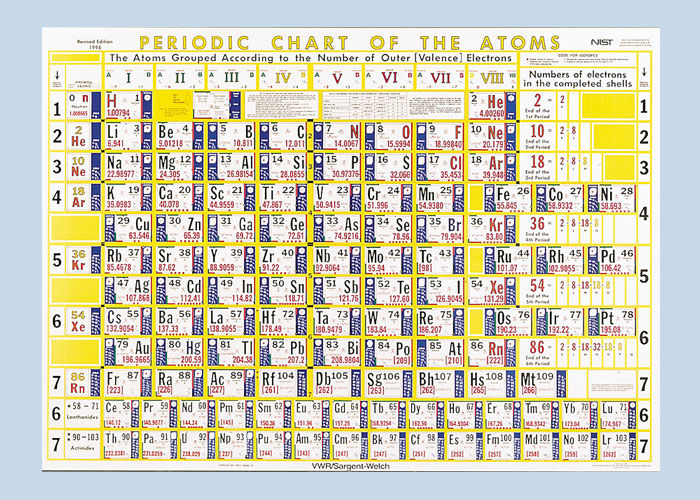
The American classic Henry Hubbard Periodic Chart Of The Atoms went through 12 editions.
A 1924 original on a dining room wall:
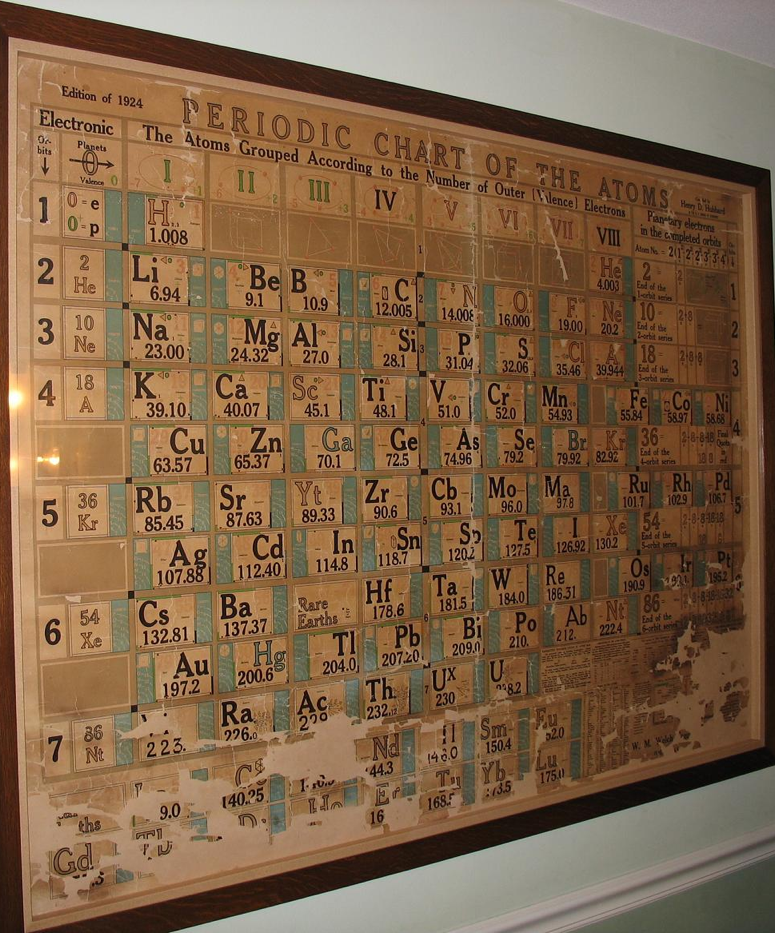
The current Sargent Welch version of the Henry Hubbard Periodic Table:
| Year: 1924 | PT id = 208, Type = formulation |
CRC Periodic Table
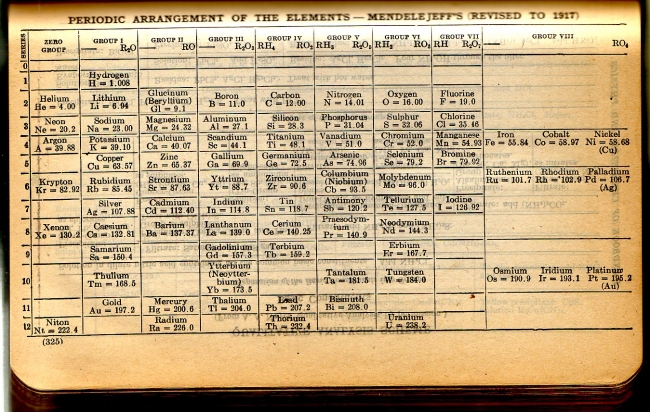
A periodic table from the 1924 CRC Handbook of Chemistry and Physics showing 79 elements. The text says "Revised To 1917". From here.
| Year: 1924 | PT id = 1342, Type = formulation |
Hubbard and His Periodic Table
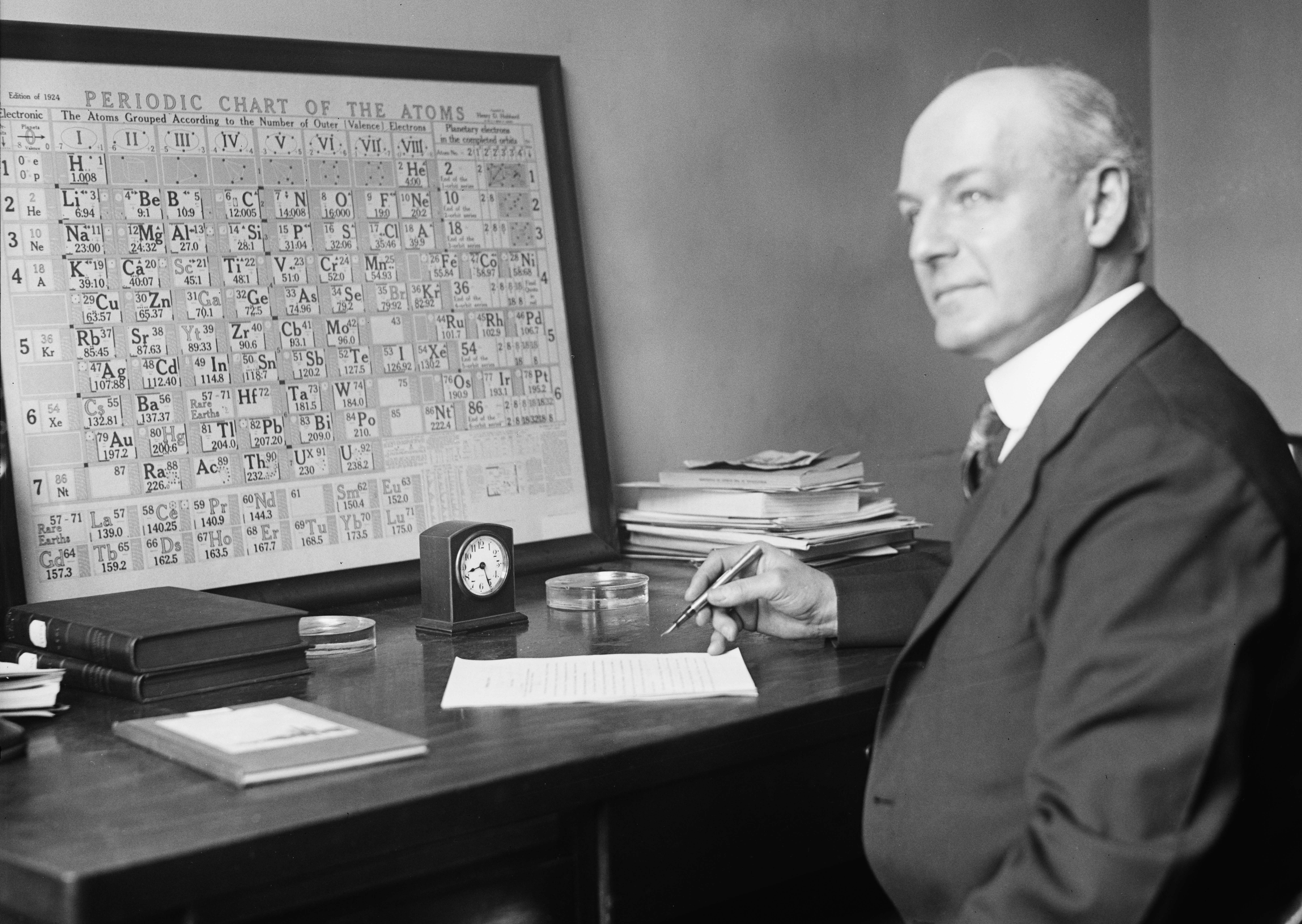
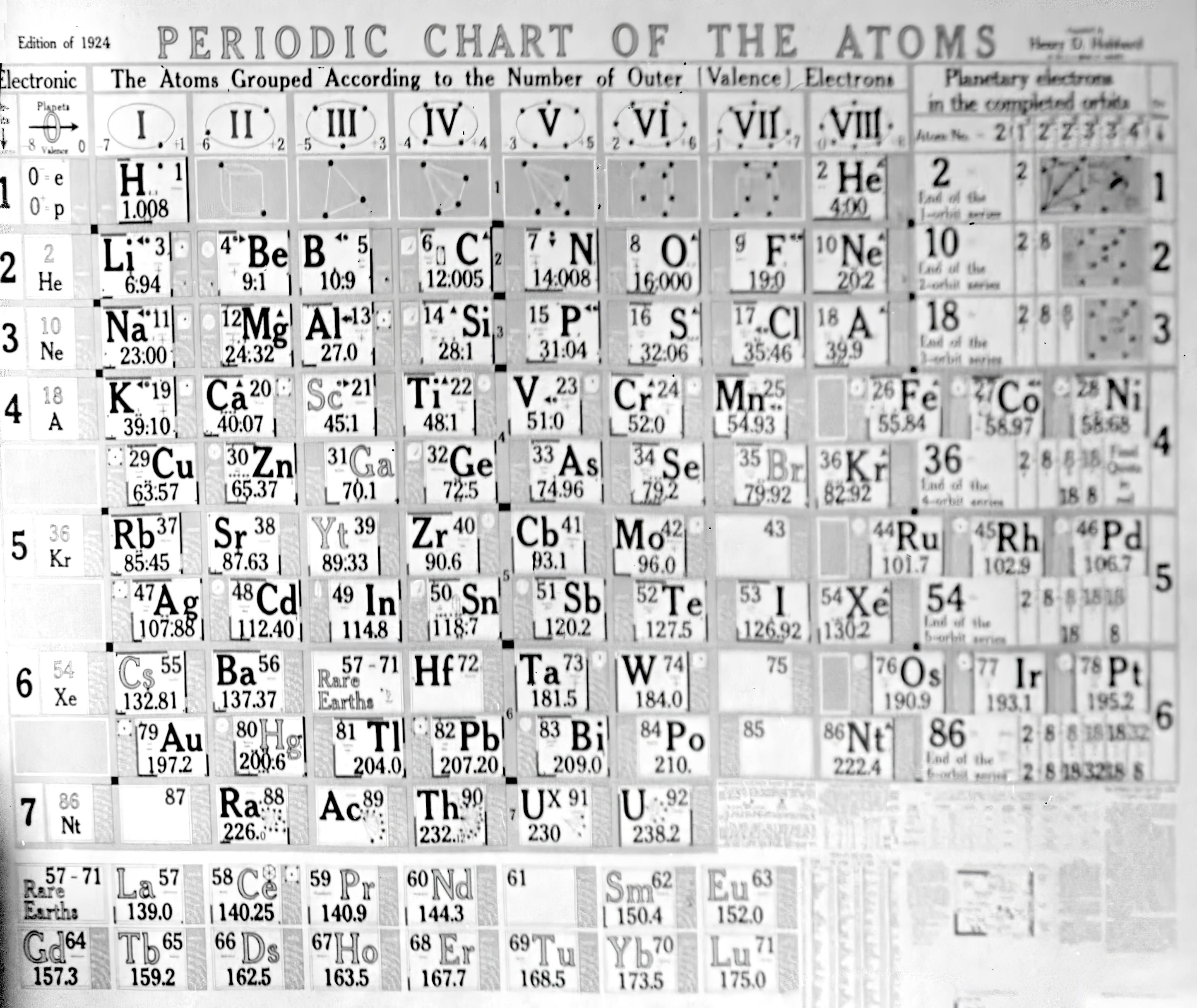
Henry D. Hubbard in front of his 1924 periodic table from wikimedia:

Thanks to Doug Simpson for the tip!
| Year: 1924 | PT id = 1372, Type = structure |
de Broglie and Wave–Particle Duality
de Broglie, L. Recherches sur la théorie des quanta. Annales de Physique, 3, 22–128 (1925). (Doctoral thesis, submitted 1924)
"Louis Victor Pierre Raymond, 7th Duc de Broglie was a French theoretical physicist and aristocrat known for his contributions to quantum theory. In his 1924 Ph.D. thesis, de Broglie postulated the wave nature of electrons and suggested that all matter has wave properties.
"This concept, now known as the de Broglie hypothesis, an example of wave–particle duality, and forms a central part of the theory of quantum mechanics. In 1929, de Broglie won the Nobel Prize in Physics, after the wave-like behaviour of matter was experimentally confirmed in 1927."
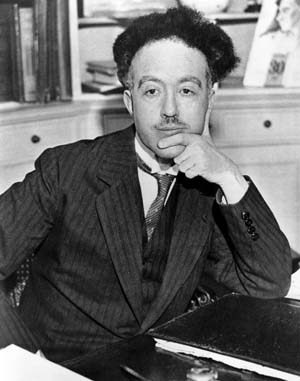
|
|
|
| What is the Periodic Table Showing? | Periodicity |
© Mark R. Leach Ph.D. 1999 –
Queries, Suggestions, Bugs, Errors, Typos...
If you have any:
Queries
Comments
Suggestions
Suggestions for links
Bug, typo or grammatical error reports about this page,please contact Mark R. Leach, the author, using mark@meta-synthesis.com
This free, open access web book is an ongoing project and your input is appreciated.