Periodic Table |
 |
 |
 |
 |
 |
 |
 |
| What is the Periodic Table Showing? | Periodicity |
The INTERNET Database of Periodic Tables
There are thousands of periodic tables in web space, but this is the only comprehensive database of periodic tables & periodic system formulations. If you know of an interesting periodic table that is missing, please contact the database curator: Mark R. Leach Ph.D. The database holds information on periodic tables, the discovery of the elements, the elucidation of atomic weights and the discovery of atomic structure (and much, much more).
Periodic Tables from the year 1979 :
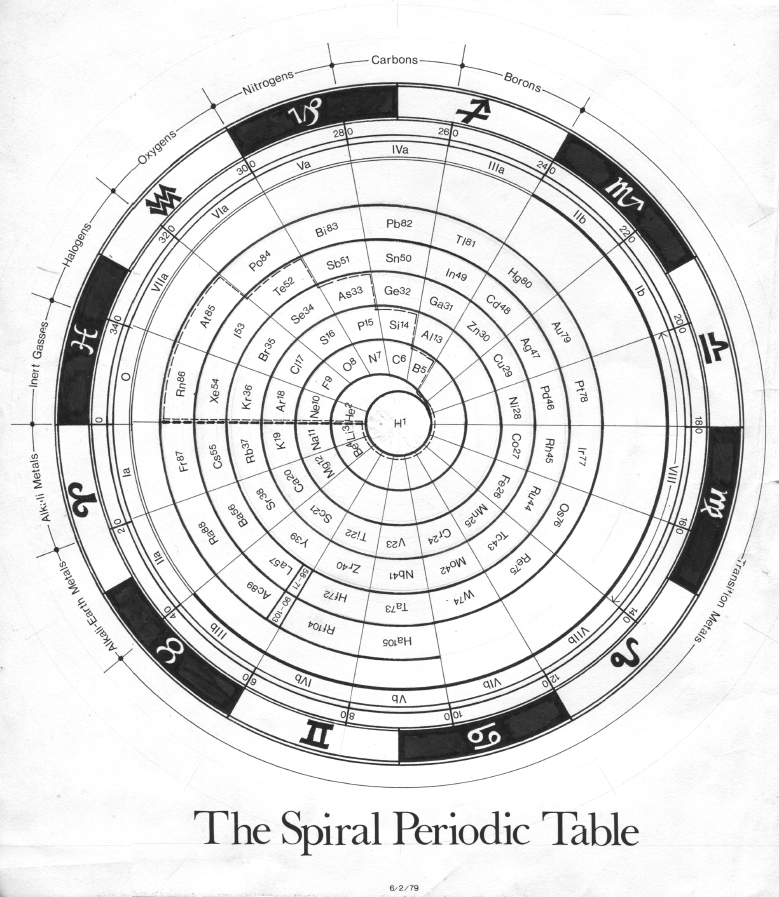
| 1979 | Mann's Spiral Periodic Table |
| 1979 | Seaborg's "How the Periodic Table Evolved Over 40 Years" (1939 – 1979) |
| Year: 1979 | PT id = 471, Type = non-chem formulation spiral |
Mann's Spiral Periodic Table
From AT Mann:
"I designed a spiral periodic table which was published first in my book The Divine Plot: Astrology, Reincarnation, Cosmology and History (George Allen & Unwin, London, 1986) which attempts to correlate the PT with astrological understanding of the inherent properties of the signs and planets":
| Year: 1979 | PT id = 994, Type = formulation review |
Seaborg's "How the Periodic Table Evolved Over 40 Years" (1939 – 1979)
From the C&EN paper THE PERIODIC TABLE: Tortuous path to man-made elements 57, 1979, pp 46-52.
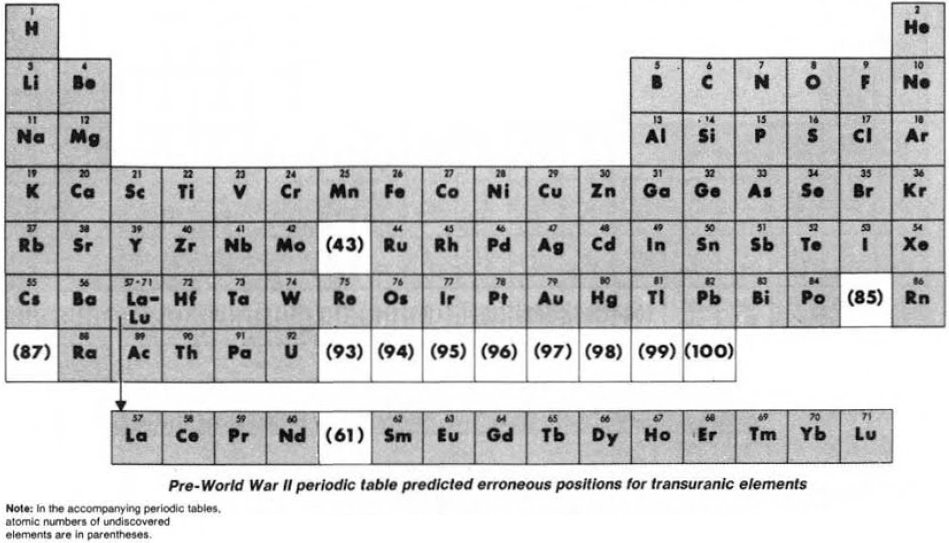
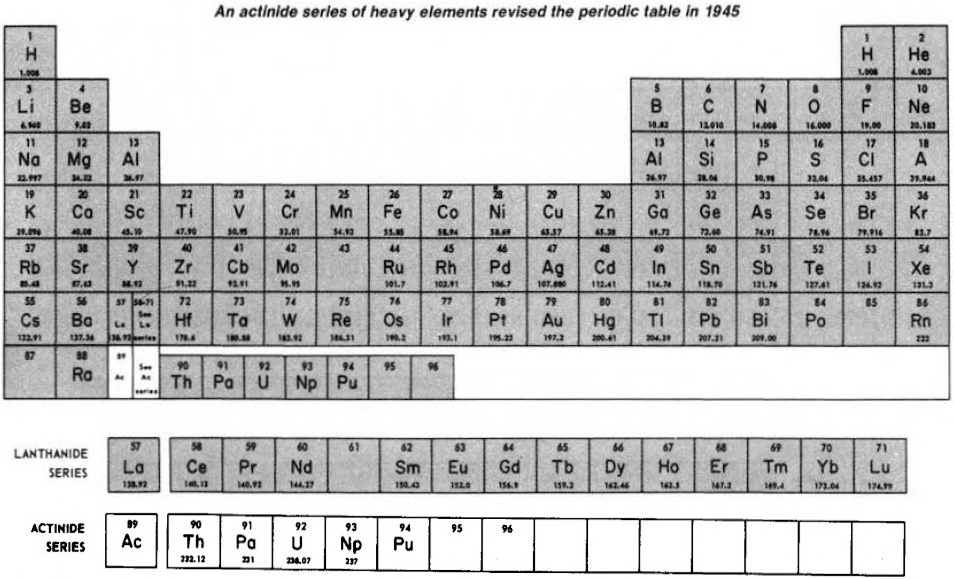
Until World War II, the three heaviest known elements – thorium, protactinium & uranium – were believed to be related to hafnium, tantalum & tungsten respectively. Similarly, elements 93 to 100 were expected to fit neatly into the periodic table:
Synthesis and study of the transuranic elements – neptunium & plutonium – indicated that these new elements were "cousins" of uranium and in 1944 should be placed into a new "uranide" group.
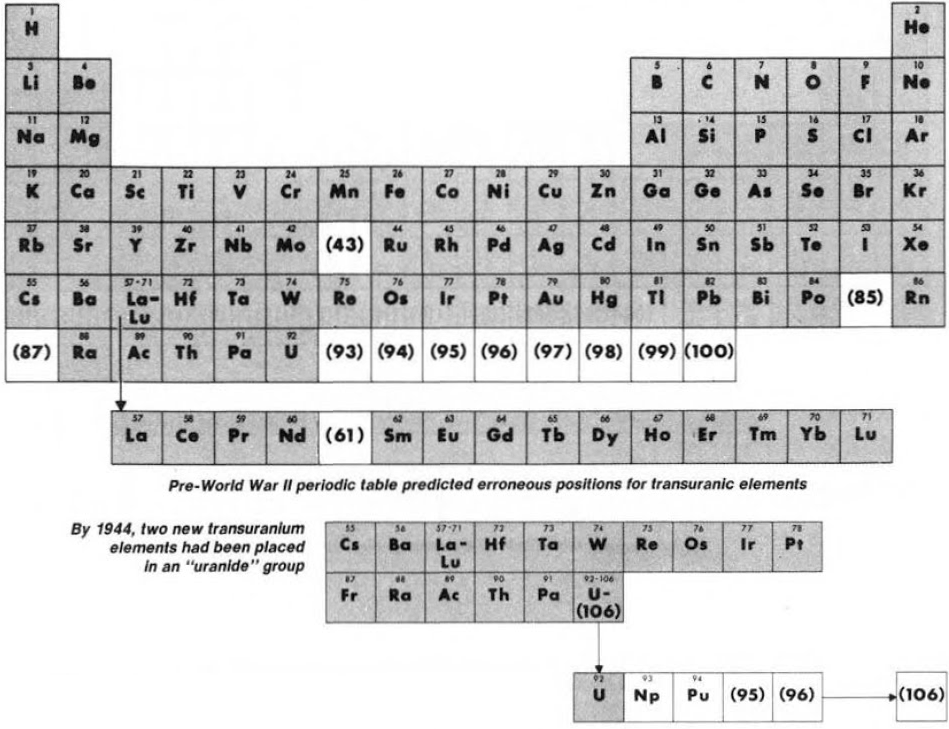
Subsequently (1944/45), Seaborg advanced the theory that elements heavier than actinium actually constitute a distinct "actinide" group that mirrors the lanthanide rare-earth group:
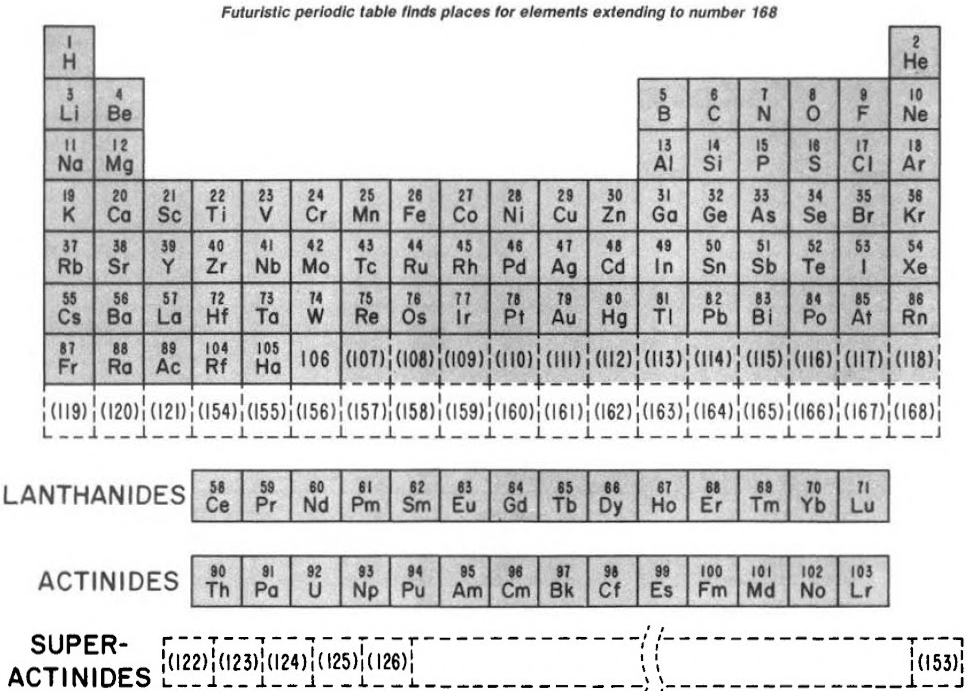
Finally, Seaborg postulated what a future periodic table, up to Z = 168, may look like:
|
|
|
| What is the Periodic Table Showing? | Periodicity |
© Mark R. Leach Ph.D. 1999 –
Queries, Suggestions, Bugs, Errors, Typos...
If you have any:
Queries
Comments
Suggestions
Suggestions for links
Bug, typo or grammatical error reports about this page,please contact Mark R. Leach, the author, using mark@meta-synthesis.com
This free, open access web book is an ongoing project and your input is appreciated.