Periodic Table |
 |
 |
 |
 |
 |
 |
 |
| What is the Periodic Table Showing? | Periodicity |
The INTERNET Database of Periodic Tables
There are thousands of periodic tables in web space, but this is the only comprehensive database of periodic tables & periodic system formulations. If you know of an interesting periodic table that is missing, please contact the database curator: Mark R. Leach Ph.D. The database holds information on periodic tables, the discovery of the elements, the elucidation of atomic weights and the discovery of atomic structure (and much, much more).
Periodic Tables from the year 1953 :
| 1953 | Chaverri-Rodríguez Tabla Periódica de los Elementos Químicos |
| 1953 | Mendoza's Periodic Table |
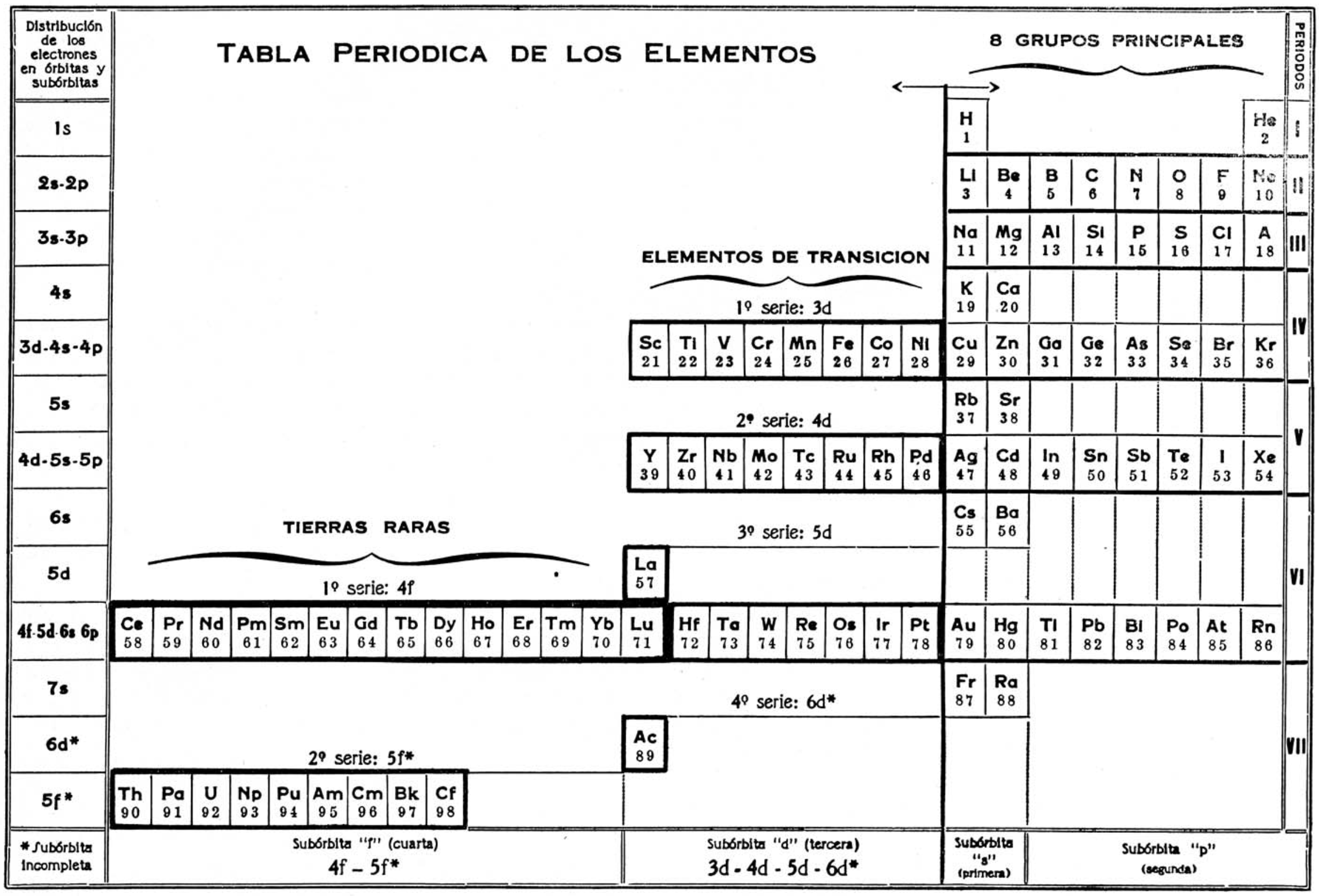
| 1953 | Chaverri's Tabla Periodica de Los Elementos |
| 1953 | Kapustinsky's Pyrimid |
| Year: 1953 | PT id = 397, Type = formulation |
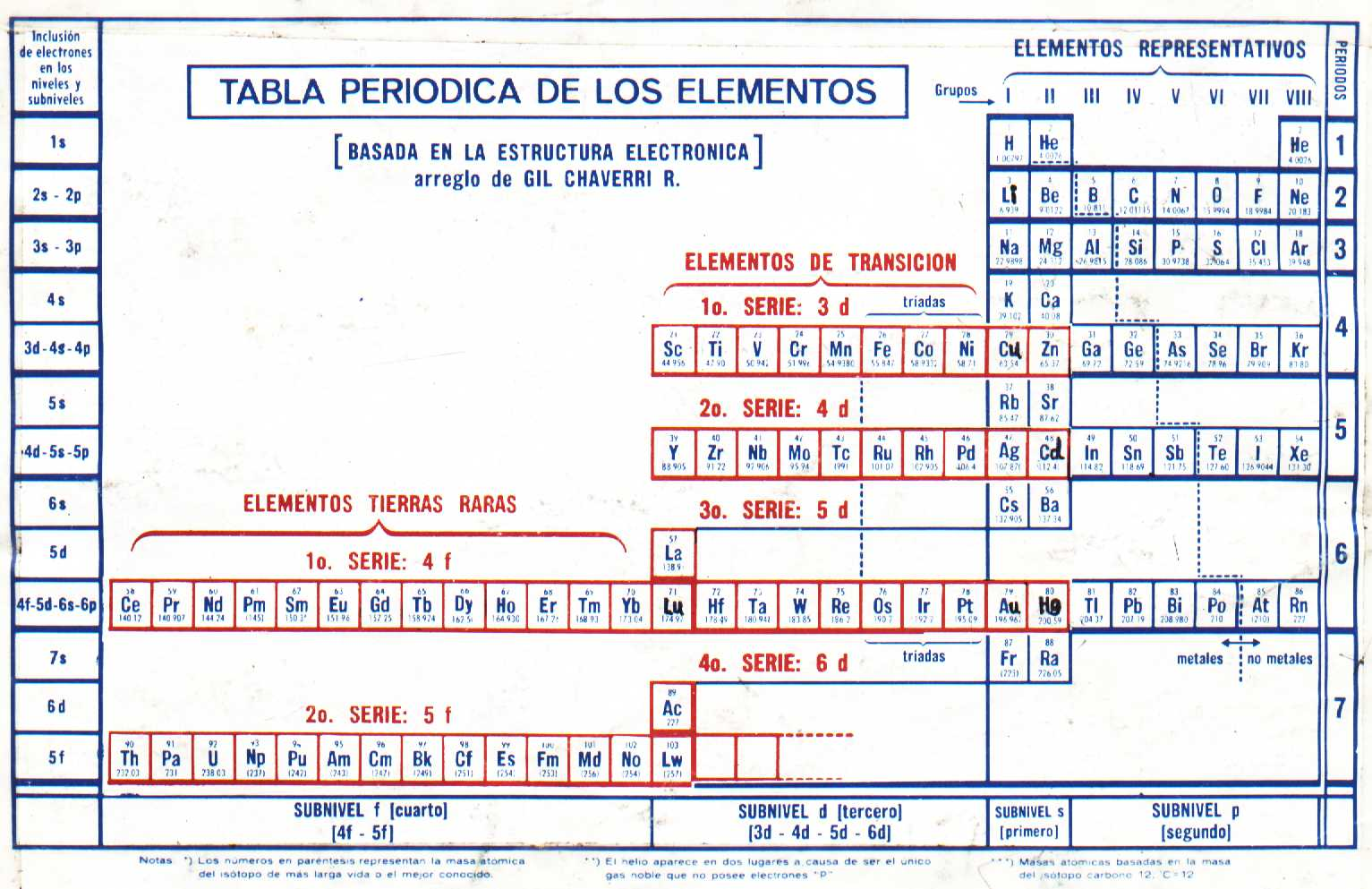
Chaverri-Rodríguez Tabla Periódica de los Elementos Químicos
Spanish to English translation from here.
Click here to see a larger version.
Originally published: Tabla Periódica de los Elementos. J. Chem. Educ. 1953, 30, 632-633
"The arrangement of the Periodic Table of the Elements according to Gil Chaverri-Rodríguez mainly takes into account the electronic structure of an element in determining the element's position in the table. It takes into account the different periods of elements have different length, because the first is of two elements, then followed by two periods of eight elements each, then two periods of 18 elements each, then a period of thirty-two elements and finally a seventh period incomplete.
"The table takes into account the important fact that, despite the variable length, the first two elements and the last six items in each period respectively have similar properties, forming the eight groups or columns of representative elements with similar chemical properties. The elements that constitute the Series Transition and Rare Earth Series are arranged in rows, in locations that correspond to how energy sublevels are filled that characterize these elements. Each element corresponds to a specific place and only in a box in the table, with no need to drop items off the table, at the foot of it, as in previous arrangements.
"With the information provided by the Board, you can deduce the electronic structure of a component, from its placement on the table, except the few cases that have small irregularities. In general, the Table is a settlement based on the electronic structure of chemical elements and this criterion determines its position in the array.":
| Year: 1953 | PT id = 407, Type = formulation |
Mendoza Periodic Table
A paper (PDF here) titled "Generic Laws of The Chemical Elements: A New Periodic System" by the Peruvian Oswaldo Baca Mendoza. Click here for a large version:
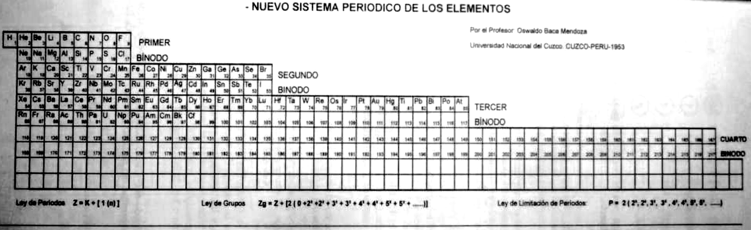
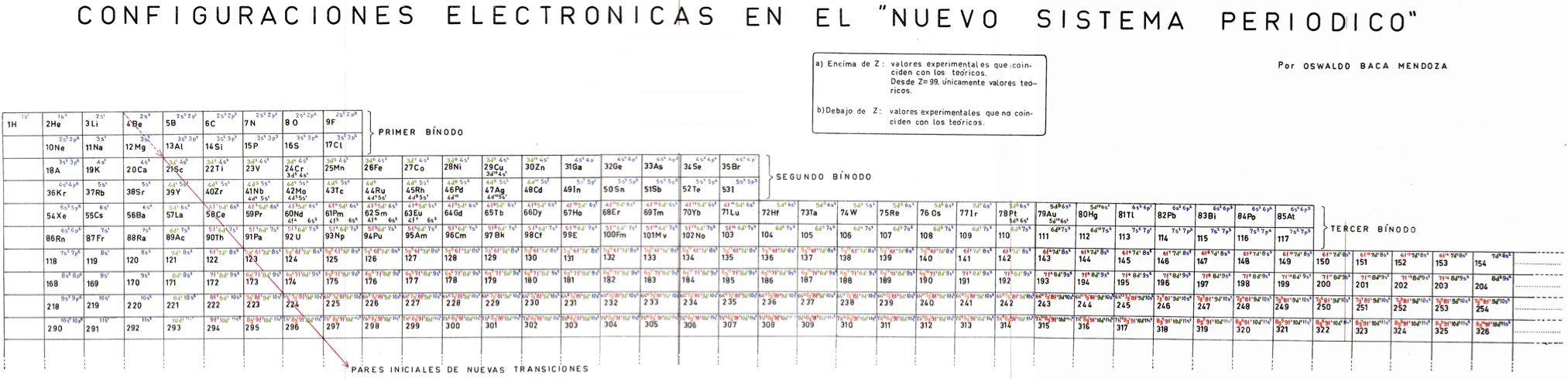
| Year: 1953 | PT id = 1235, Type = formulation |
Chaverri's Tabla Periodica de Los Elementos
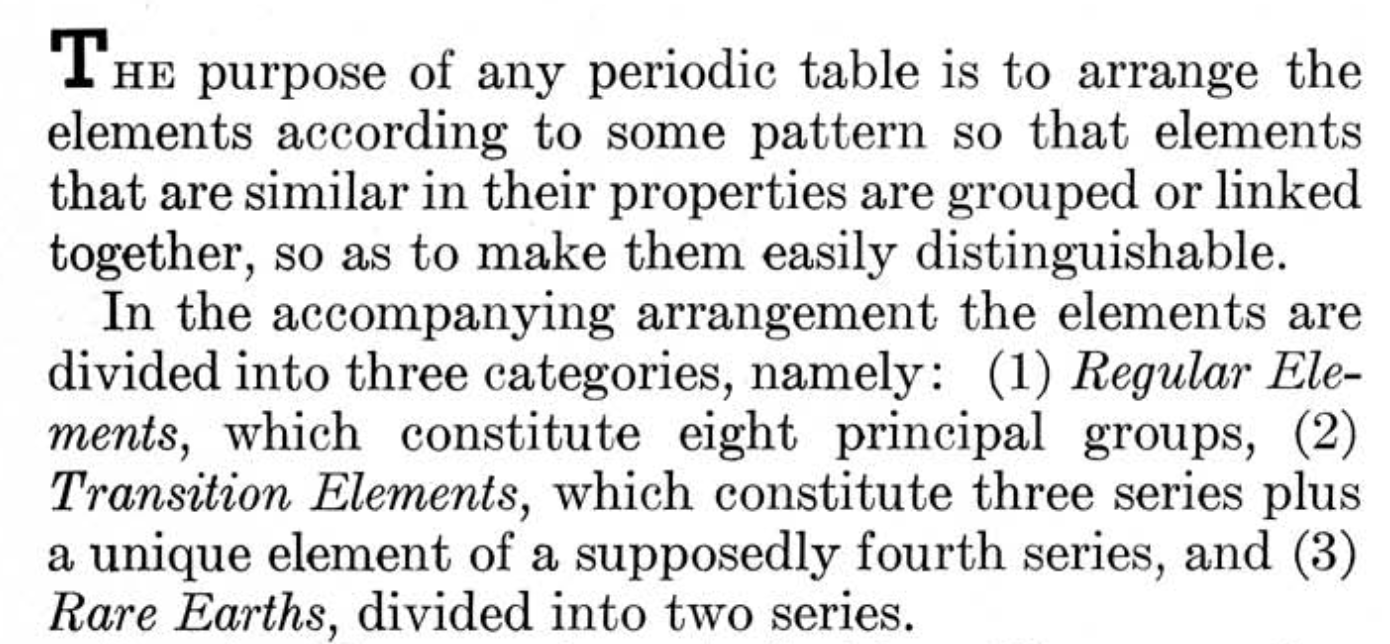
Gil Chaverri's Tabla Periodica de Los Elementos (Periodic Table of The Elements, J. Chem. Educ. 1953, 30, 12, 632):
| Year: 1953 | PT id = 1387, Type = formulation 3D spiral |
Kapustinsky's Pyrimid
Kapustinsky, A. F. (1953). Periodicity in the structure of the electron envelopes and nuclei of atoms Communication 1. Periodic system of the elements and its connection with the theory of numbers and with physicochemical analysis. Bulletin of the Academy of Sciences of the USSR Division of Chemical Science, 2(1), 1–9. Paper as pdf.
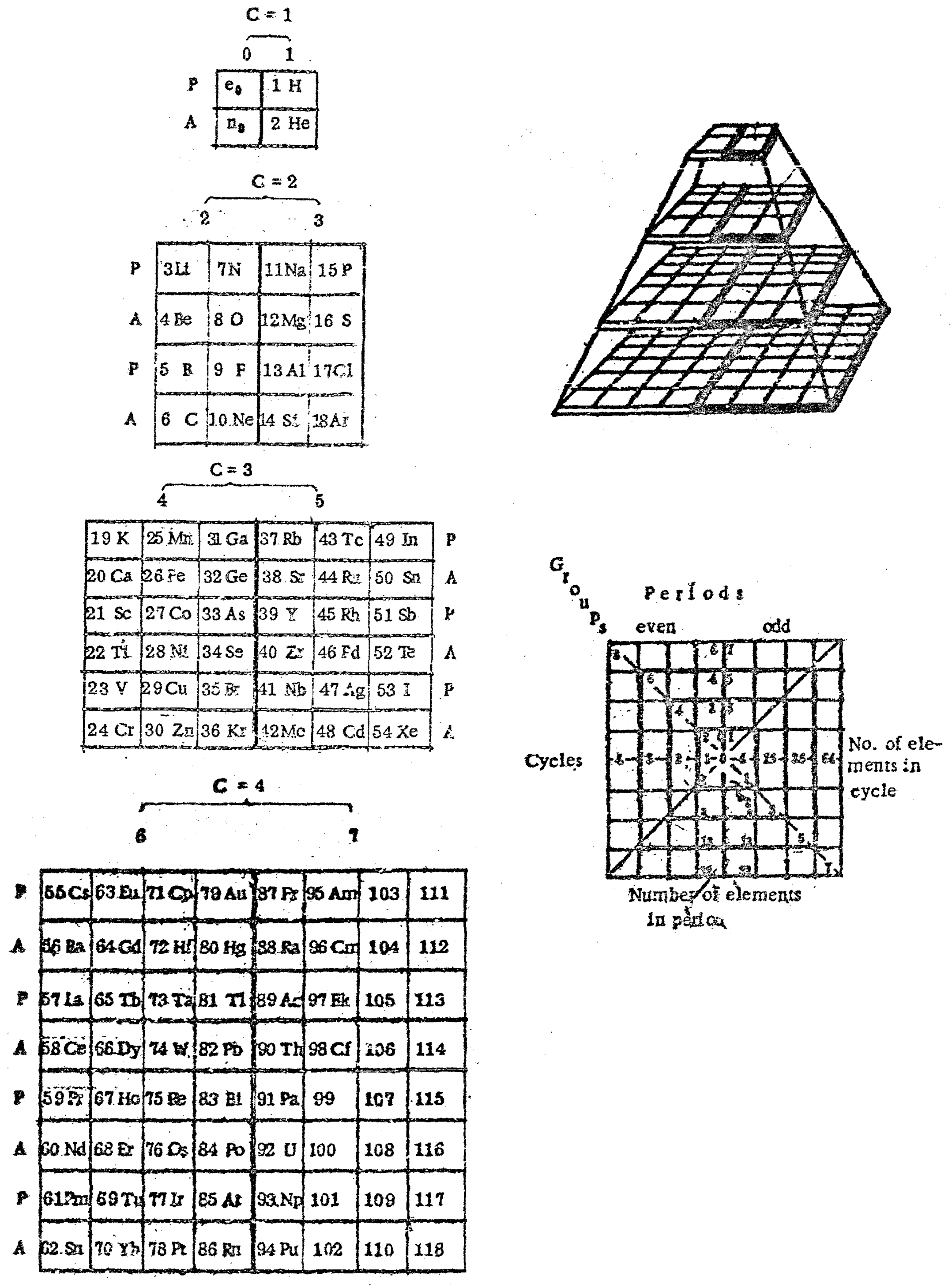
Thanks to René Vernon for the tip!
|
|
|
| What is the Periodic Table Showing? | Periodicity |
© Mark R. Leach Ph.D. 1999 –
Queries, Suggestions, Bugs, Errors, Typos...
If you have any:
Queries
Comments
Suggestions
Suggestions for links
Bug, typo or grammatical error reports about this page,please contact Mark R. Leach, the author, using mark@meta-synthesis.com
This free, open access web book is an ongoing project and your input is appreciated.