Periodic Table |
 |
 |
 |
 |
 |
 |
 |
| What is the Periodic Table Showing? | Periodicity |
The INTERNET Database of Periodic Tables
There are thousands of periodic tables in web space, but this is the only comprehensive database of periodic tables & periodic system formulations. If you know of an interesting periodic table that is missing, please contact the database curator: Mark R. Leach Ph.D. The database holds information on periodic tables, the discovery of the elements, the elucidation of atomic weights and the discovery of atomic structure (and much, much more).
Periodic Tables from the year 1970 :
| Year: 1970 | PT id = 186, Type = formulation spiral |
Monument to the Periodic Table
Monument to the periodic table, in front of the Faculty of Chemical and Food Technology of the Slovak University of Technology in Bratislava, Slovakia. The monument honors Dmitri Mendeleev, and is by the artist Karol Lacko, academic sculptor born in 1938 in Spiská Noá Ves, and who died in 2007. (Many thanks to Fathi Habashi for finding this information.)

| Year: 1970 | PT id = 321, Type = formulation misc data |
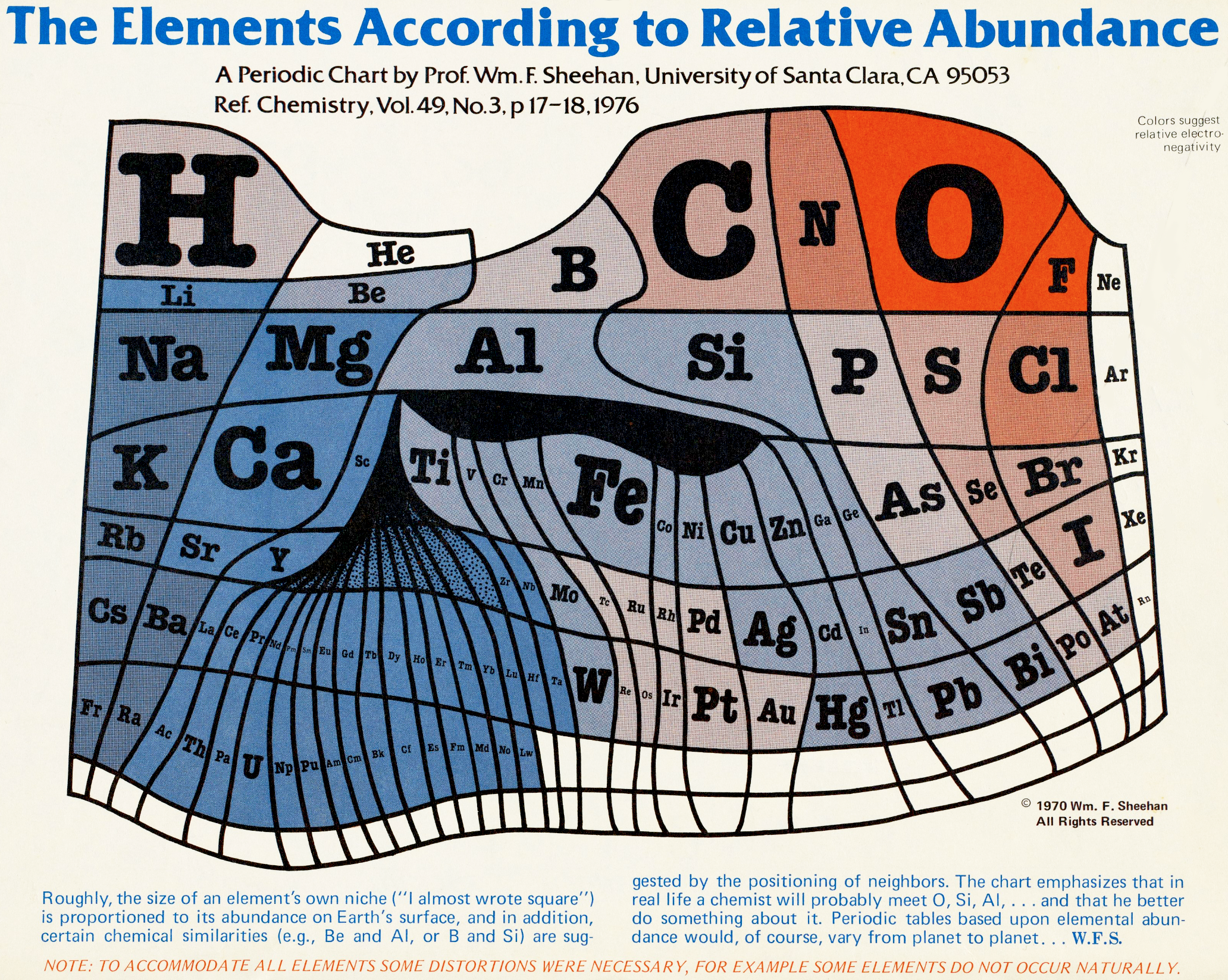
Abundance of the Elements
A 1970 periodic table by Prof. Wm. F. Sheehan of the University of Santa Clara that claims to show the elements according to relative abundance at the Earth's surface. [However, we dispute the relative areas given to the various elements; there is almost no helium at the Earth's surface, for example.] Click the image to enlarge:
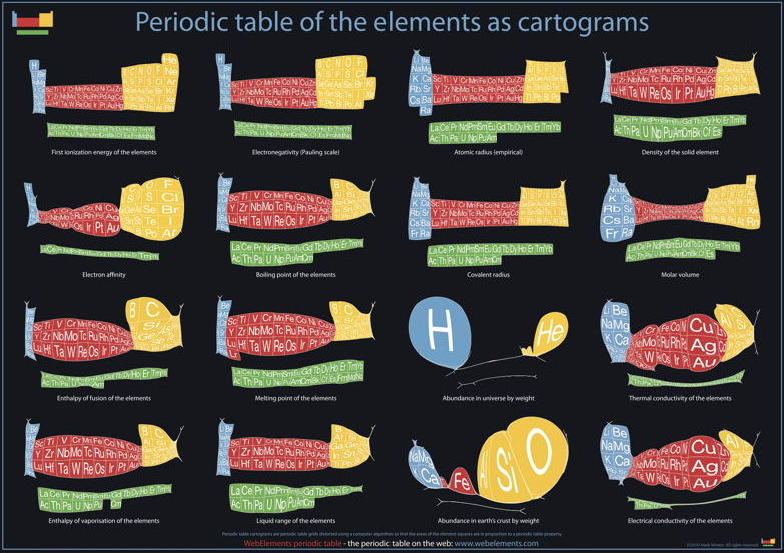
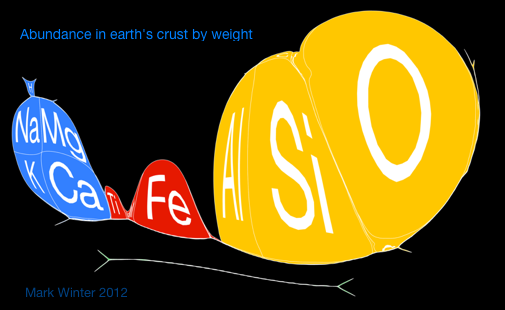
Below are some cartiogram representations, including the relative abundance of the elements in the Earth's crust, from Mark Winter's WebElements website:
| Year: 1970 | PT id = 885, Type = element |
Discovery of Dubnium
Db 
Dubnium, atomic number 105, has a mass of 268 au.
Synthetic radioactive element.
Dubnium was first observed in 1970 by A. Ghiorso et al. and V. A. Druin et al.
| Year: 1970 | PT id = 1007, Type = formulation |
Pauling's "General Chemistry" Periodic Table
From Linus Pauling's General Chemistry (3rd Ed.). Notice that the noble gases apear twice, at the beginning and the end of each period.
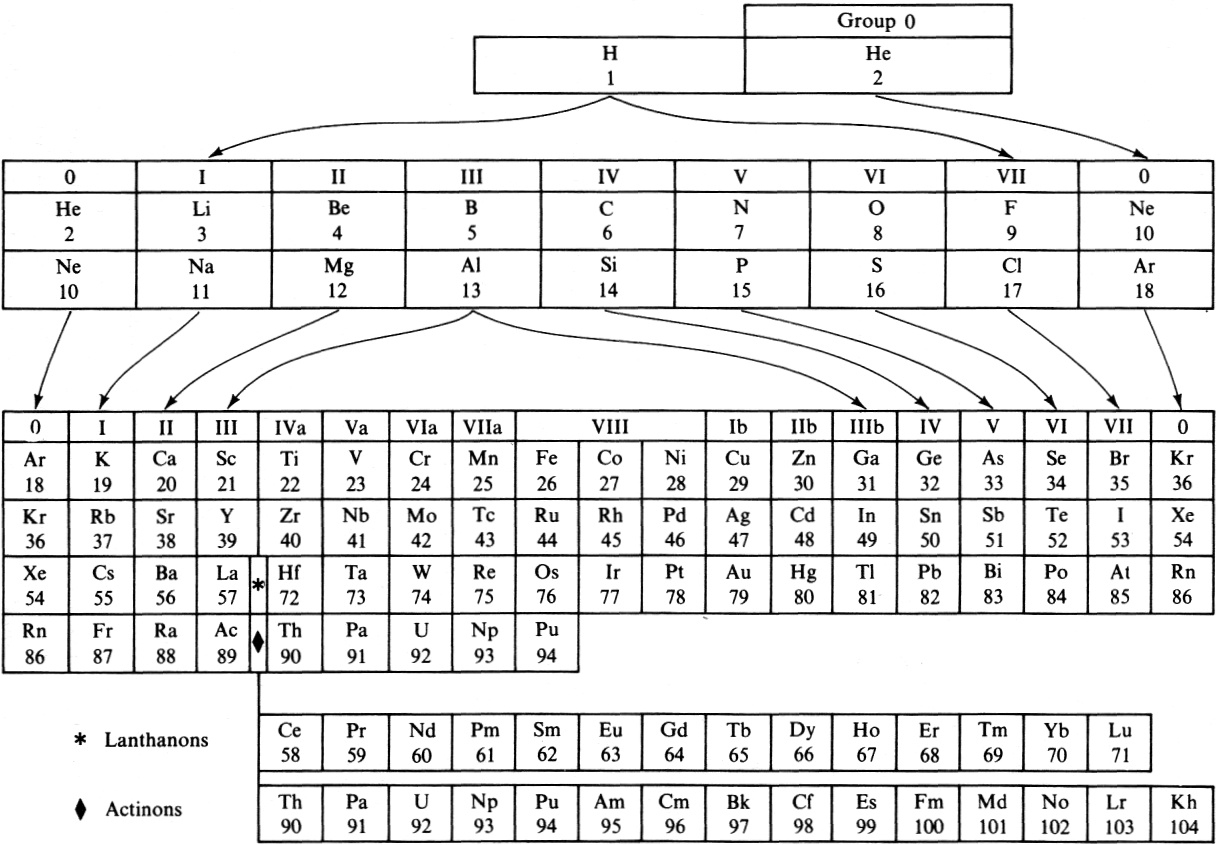
Thanks to René for the tip!
| Year: 1970 | PT id = 1055, Type = formulation |
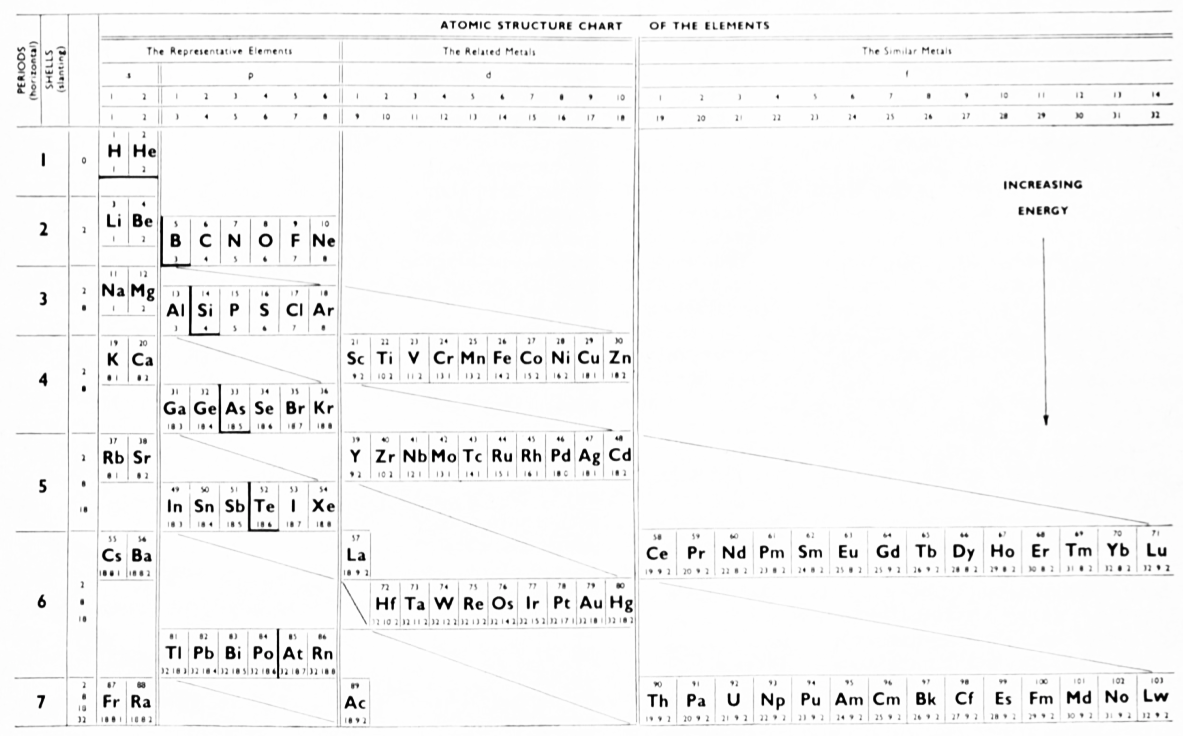
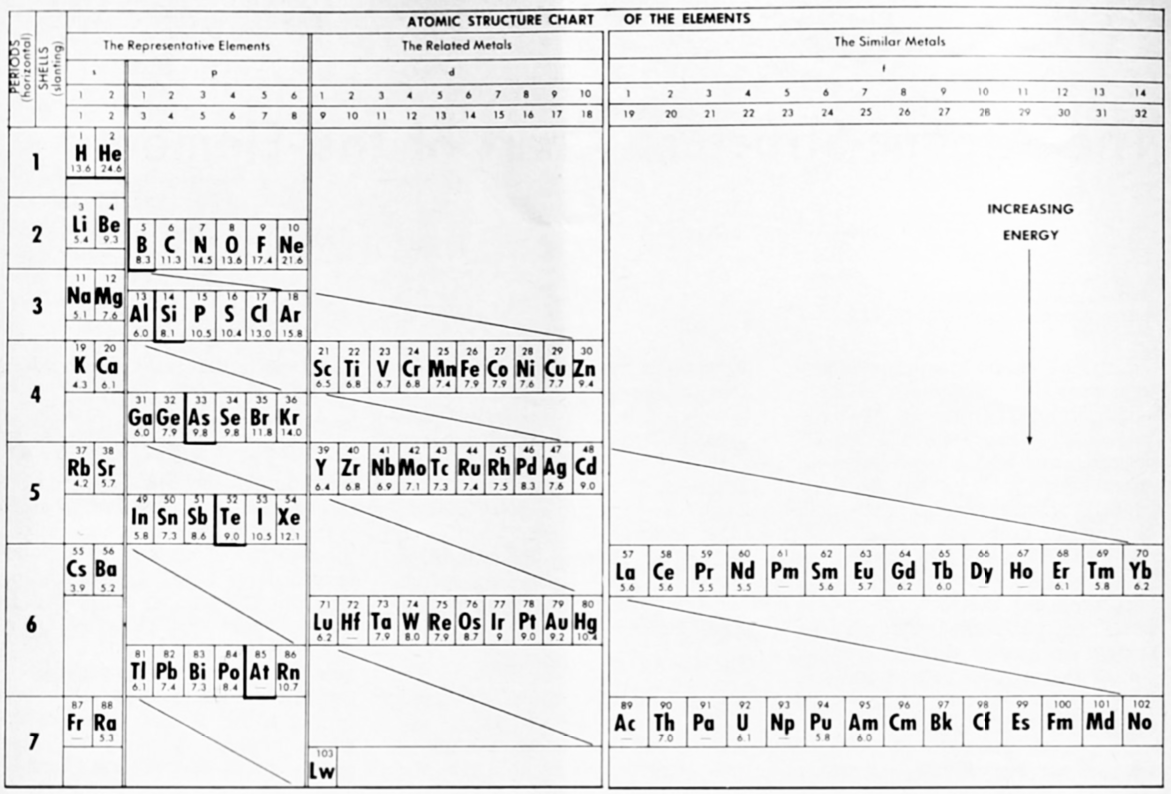
Luder's Atomic-Structure Chart of the Elements
W.F. Luder, The Atomic-Structure Chart of the Elements, Canadian Chemical Education, April 1970, pp13-16.
Eric Scerri writes:
"A very nice article from 1970. This deals with the group 3 question in a very dear and simple fashion."
"I corresponded with the author in the 1980s. Also, I have always wondered where Jensen got some of his information for his article on group 3. I think it's from this and other articles by Luder. He published a number of articles in Journal of Chemical Education."
| Year: 1970 | PT id = 1188, Type = formulation data |
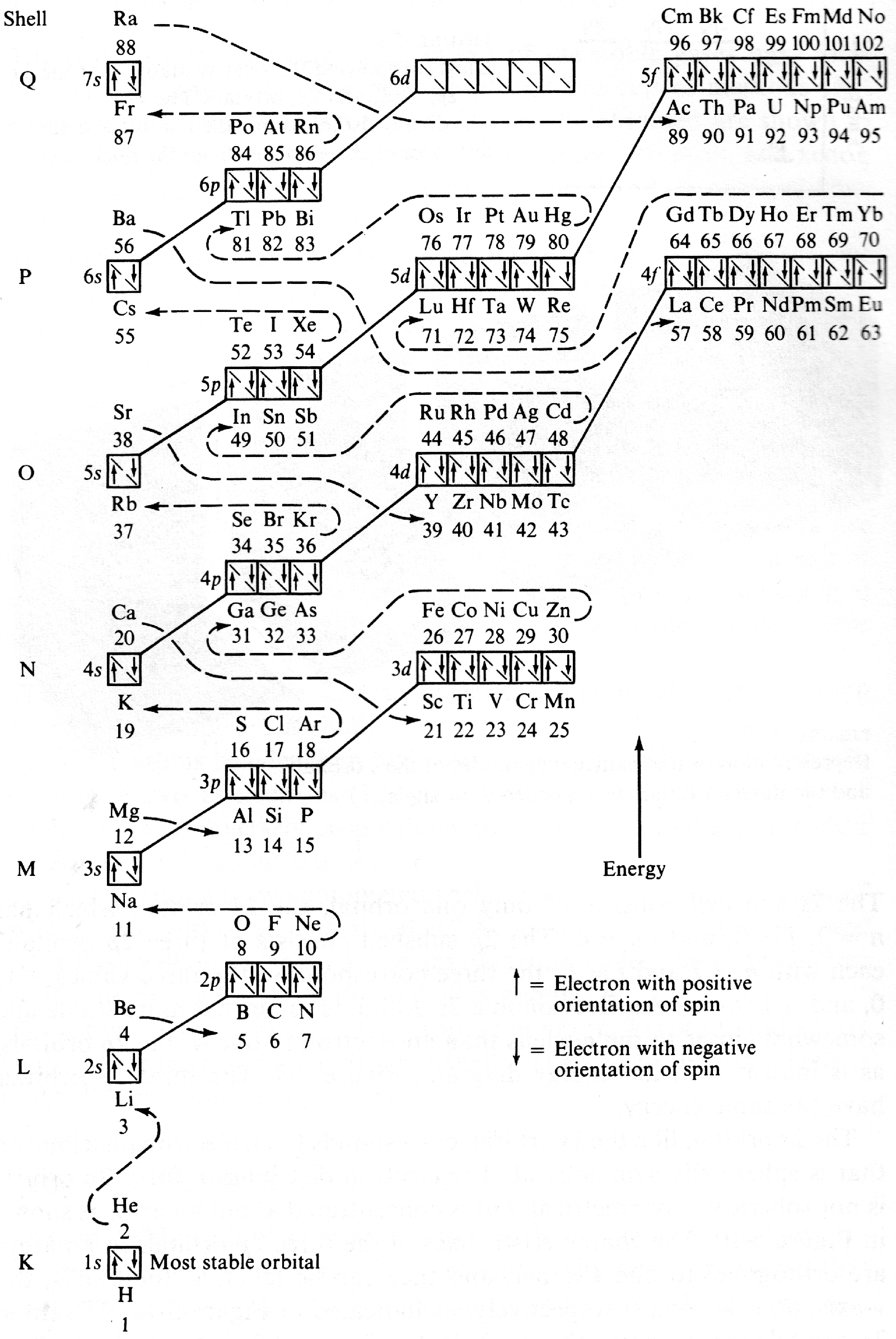
Energy Level Diagram of Electron Shells & Subshells of the Elements
Figure 5-11 from page 128 of Linus Pauling's General Chemistry, W.H. Freeman, San Francisco 1970 (Dover Edition 1988):
|
|
|
| What is the Periodic Table Showing? | Periodicity |
© Mark R. Leach Ph.D. 1999 –
Queries, Suggestions, Bugs, Errors, Typos...
If you have any:
Queries
Comments
Suggestions
Suggestions for links
Bug, typo or grammatical error reports about this page,please contact Mark R. Leach, the author, using mark@meta-synthesis.com
This free, open access web book is an ongoing project and your input is appreciated.